

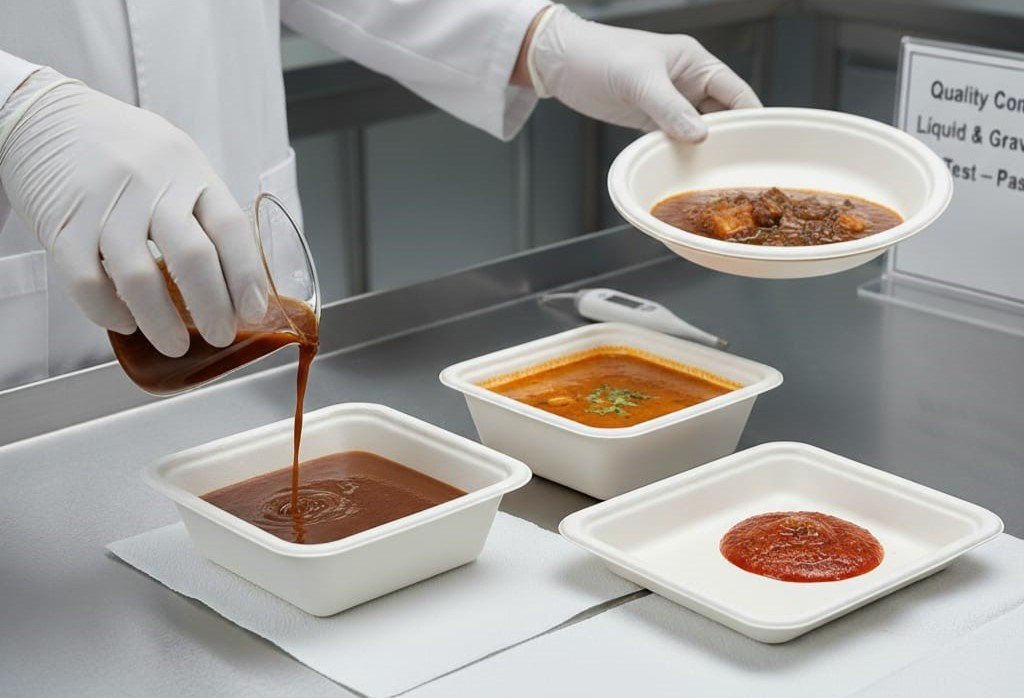
Bagasse products have emerged as a leading sustainable alternative to single-use plastics, revolutionizing the food service, catering, and packaging industries worldwide. As eco-conscious consumers and businesses increasingly adopt bagasse tableware and packaging materials, understanding how to evaluate product quality has become essential. Poor-quality bagasse items can compromise durability, food safety, and environmental benefits—undermining the very reasons you chose sustainable packaging in the first place.
This comprehensive guide will equip you with the knowledge and inspection techniques to assess bagasse product quality before making your purchase, ensuring you get the best value and performance from your eco-friendly solutions.
1. Inspect Physical Appearance and Material Consistency
Why It Matters: The visual quality of bagasse products is your first indicator of manufacturing excellence and material integrity.
High-quality bagasse items should feature a smooth, uniform finish with no visible impurities, rough textures, or color variations. Inconsistencies in surface appearance often signal poor-quality raw materials or inadequate production processes.
What to Look For:
– Smooth, consistent texture across the entire product surface
– Uniform color with no dark spots, discoloration, or fading
– Clean edges without rough, jagged, or unfinished areas
– Absence of visible fibers, residue, or manufacturing defects
– Professional, polished appearance that reflects quality craftsmanship
Inspection Steps:
– Examine multiple pieces from the batch visually under good lighting
– Run your fingers across the surface to verify smoothness
– Check for uniformity by comparing several products side by side
– Inspect the bottom, edges, and interior surfaces thoroughly
2. Verify Thickness and Weight Consistency
Why It Matters: Thickness and weight directly impact the durability, functionality, and cost-effectiveness of bagasse products.
Products that are too thin may bend, break, or leak when containing liquids or greasy foods. Conversely, excessive thickness adds unnecessary weight and cost. Premium manufacturers maintain consistent thickness and weight across all products to meet specific performance standards and customer expectations.
What to Look For:
– Uniform thickness throughout all products in your batch
– Appropriate weight that feels substantial but not excessive
– No thin spots, weak areas, or uneven material distribution
– Consistent performance specifications across samples
Inspection Steps:
– Measure thickness at multiple points using calipers (check edges, center, and corners)
– Weigh several samples using a digital scale and compare against manufacturer specifications
– Apply gentle pressure across different areas to detect weak spots or uneven density
– Document measurements to ensure consistency across future orders
3. Test Strength and Durability
Why It Matters: Bagasse products must maintain structural integrity when exposed to hot, cold, oily, or acidic foods without compromising food safety.
A quality product should resist moisture absorption, maintain its shape, remain leakproof, and withstand the demands of real-world food service applications without deforming or breaking.
What to Look For:
– Strong structural integrity that doesn’t collapse under normal use
– Heat resistance for hot foods and beverages
– Grease-proof and leak-resistant performance
– Resilience when exposed to moisture
– No buckling, tearing, or degradation with light pressure
Inspection Steps:
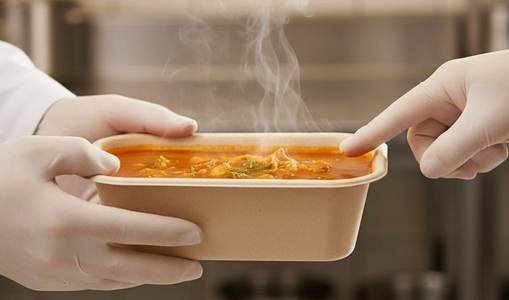
– Fill the container or plate with hot soup or beverage and observe for shape loss
– Test with oily or fatty foods to check grease-resistance
– Allow the product to sit with liquid for 15-20 minutes and monitor for moisture absorption
– Gently press edges and bottom with moderate force to ensure no buckling or tearing
– Check that hinges and locking mechanisms on takeout containers function smoothly and remain durable
4. Verify Biodegradability and Compostability
Why It Matters: Environmental sustainability is the primary reason for choosing bagasse over conventional plastics. Low-quality bagasse products may contain synthetic coatings or binders that prevent true decomposition.
Authentic compostability certifications guarantee that your products will break down naturally without leaving harmful residue, maximizing environmental benefits.
What to Look For:
– Official certifications such as BPI (Biodegradable Products Institute), OK Compost, ASTM D6400, or EN 13432
– Third-party verified biodegradation test reports
– Clear labeling confirming compostability standards
– Transparent manufacturing practices
Inspection Steps:
– Request and review compostability certifications and test reports from your supplier
– Search the certification database on official websites to verify authenticity
– Conduct a simple compost bin test: place a small product sample in your compost and monitor decomposition over 2-3 weeks
– Ask your supplier to provide documentation of their compostability verification process
5. Conduct a Taste and Odor Test
Why It Matters: Quality bagasse products should be completely neutral—never imparting flavors, odors, or chemical residues to food.
Poor-quality products may retain manufacturing odors, bleaching agents, or chemical residues that compromise food safety and the dining experience. A burned-fiber smell or strong chemical odor indicates substandard processing.
What to Look For:
– Completely neutral odor with no chemical, burned, or unpleasant smells
– No transfer of flavors or odors to food
– Clean, food-safe manufacturing processes
– Professional handling that ensures hygiene throughout production
Inspection Steps:
– Before using the product, smell it carefully—it should have no strong or off-odors
– Place a small portion of neutral food (plain rice, bread, or water) on the product
– Allow the food to sit for 10-15 minutes in contact with the bagasse item
– Taste the food and check for any absorbed flavors or chemical notes
– If you detect any unusual taste or smell, the product likely has quality issues
6. Assess Flexibility and Resistance to Breaking
Why It Matters: Premium bagasse products balance flexibility and strength to prevent both cracking and collapse during food service.
This balance ensures the product performs reliably across diverse applications without failing during use or transport.
What to Look For:
– Slight flexibility without cracking under moderate pressure
– Strong structural support that doesn’t collapse
– Smooth, functional hinges and locking mechanisms on containers
– Durability that withstands repeated opening and closing
– No permanent deformation from normal handling
Inspection Steps:
– Place the product on a flat surface and gently press down on the edges
– Observe for slight bending (good) rather than cracking (poor) or excessive flexibility (concerning)
– For takeout containers, open and close the lid 10-15 times to test hinge durability
– Apply moderate pressure and confirm the product returns to its original shape
– Check for any cracks, splits, or permanent deformation
7. Verify Chemical Safety and Food-Grade Certifications
Why It Matters: Not all bagasse products are 100% natural. Some manufacturers use harmful chemicals, synthetic coatings, or bleaching agents that can leach into food—especially when serving hot or acidic items.
Food-grade certifications and chemical safety verification are critical for protecting consumers and ensuring compliance with food safety regulations.
What to Look For:
– BPA-free, PFAS-free, and heavy-metal-free certifications
– Natural color (slightly off-white or beige) rather than bleached white
– No synthetic coatings or plastic-like finishes
– Third-party chemical safety testing documentation
– Compliance with international food safety standards
Inspection Steps:
– Request Material Safety Data Sheets (MSDS) and compliance certificates from your supplier
– Look for clear labeling of BPA-free and PFAS-free certifications
– Beware of products with excessively bright white finishes—this may indicate artificial bleaching or harmful coatings
– Verify that manufacturing processes use only food-safe materials and treatments
– Review independent lab testing reports confirming chemical safety
8. Confirm Sterilization and Hygiene Standards
Why It Matters: Bagasse products manufactured in hygienic conditions using proper sterilization protocols are essential for food safety and consumer protection.
Contamination during production can introduce bacteria, mold, and other harmful pathogens that compromise health and safety.
What to Look For:
– ISO 22000 (Food Safety Management System) certification
– HACCP (Hazard Analysis and Critical Control Points) certification
– Documented sterilization and quality control procedures
– Secure, sealed packaging in dust-free, clearly labeled containers
– Professional handling and storage practices
Inspection Steps:
– Request copies of ISO 22000 and HACCP certifications from your supplier
– Review manufacturer documentation detailing sterilization processes
– Inspect packaging for proper sealing, labeling, and protection from contamination
– Verify that products arrive in pristine, well-maintained condition
– Ask about the manufacturer’s quality assurance protocols and testing frequency
Why Choose Ananta Global Exim for Premium Bagasse Products?
As a trusted global manufacturer and supplier of premium eco-friendly tableware and packaging solutions, Ananta Global Exim is committed to delivering bagasse products that exceed quality standards while maximizing environmental benefits.
Our Commitment to Excellence:
– 100% Biodegradable & Compostable: All our bagasse products meet or exceed BPI, OK Compost, ASTM D6400, and EN 13432 certifications
– Chemical-Free Manufacturing: We produce completely BPA-free, PFAS-free, and heavy-metal-free products using sustainable processes
– Rigorous Quality Control: Every batch undergoes comprehensive testing for durability, safety, and performance
– Food Safety Certified: Our products comply with ISO 22000 and HACCP standards, ensuring complete peace of mind
– Customized Solutions: From bagasse plates and bowls to meal trays and takeout containers, we offer tailored solutions for your specific needs
Whether you’re a food service provider, catering company, restaurant, or retailer, Ananta Global Exim provides the quality, sustainability, and reliability you need.

Final Thoughts
Choosing quality bagasse products is an investment in both sustainability and food safety. By following these eight comprehensive quality assessment steps, you can confidently evaluate any bagasse product before purchasing, ensuring you receive items that deliver on durability, environmental impact, and consumer safety.
Don’t compromise on quality. Make the switch to sustainable packaging with **Ananta Global Exim where premium eco-friendly solutions meet uncompromising standards. Explore our full range of bagasse plates, bowls, meal trays, and takeout containers today and experience the difference that true quality makes.
Ready to upgrade to sustainable packaging? Contact Ananta Global Exim today for a consultation and discover our complete product range.