

Choosing Sustainable Food Packaging Solutions
When it comes to selecting food packaging, businesses and consumers alike must balance three critical factors: sustainability, health safety, and practical convenience. Two materials consistently emerge as top contenders in this debate: bagasse and aluminium foil. Both have gained traction in the food service industry, but they offer distinctly different benefits and drawbacks. So which one should you choose? Let’s dive into a comprehensive comparison to help you make an informed decision.
What Is Bagasse? The Sustainable Packaging Revolution
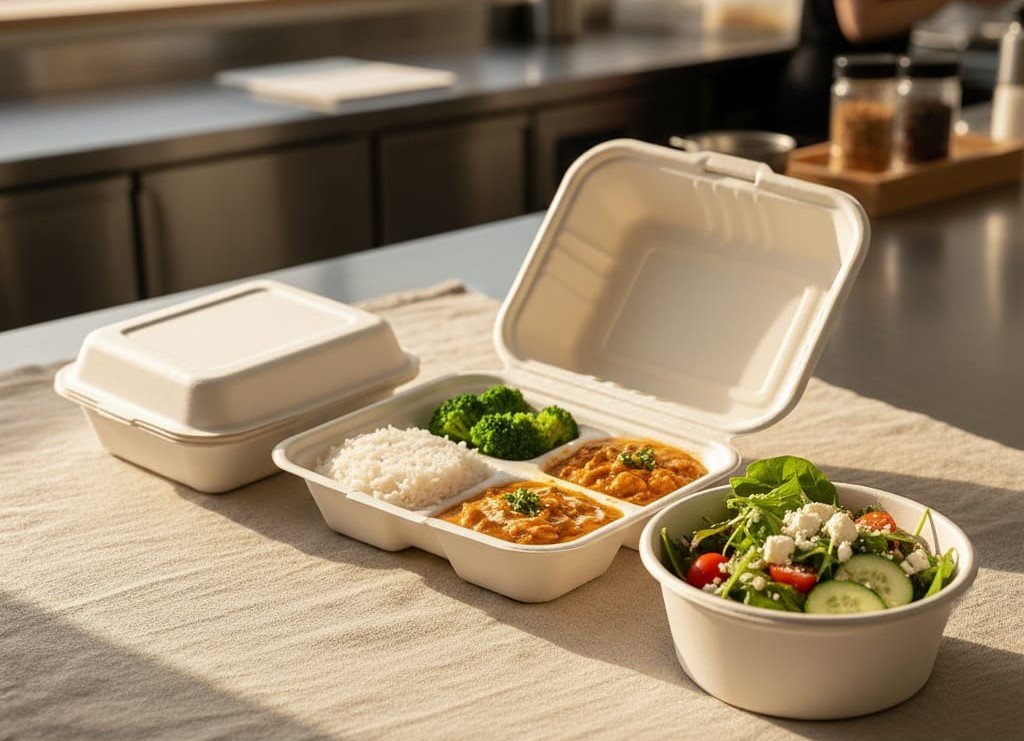
Bagasse is a natural byproduct created during sugarcane processing. This fibrous material remains after juice extraction and has transformed into a game-changing eco-friendly packaging alternative to conventional plastic and paper products over the past decade.
When processed, bagasse can be molded into an impressive variety of food service products, including plates, bowls, trays, compartmentalized containers, and takeout boxes. It’s rapidly becoming the go-to choice for restaurants, catering companies, and food delivery businesses seeking sustainable packaging solutions.
What Is Aluminium Foil? The Traditional Packaging Standard
Aluminium foil is a thin, pliable metal sheet made by flattening aluminium into a malleable layer. For decades, it has remained a kitchen staple and industrial packaging solution, prized for its ability to seal in freshness, prevent leakage, and withstand extreme temperatures. Today, it’s still commonly used for wrapping food, baking, grilling, and preserving perishables.
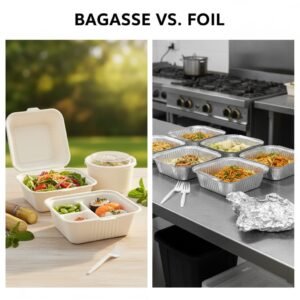
Bagasse vs Aluminium Foil: A Detailed Comparison
- Environmental Impact: Sustainability Matters Most
Bagasse: The Clear Winner for Eco-Conscious Brands
Bagasse stands out as a powerhouse in environmental responsibility. As a renewable resource derived from sugarcane waste, bagasse is fully biodegradable and compostable, breaking down naturally within months. Manufacturing bagasse containers requires minimal energy and water consumption, significantly reducing carbon footprint compared to traditional packaging options—an essential consideration for businesses committed to environmental stewardship.
Aluminium Foil: Recyclable But Energy-Intensive
While aluminium foil is technically recyclable, the reality is more complex. Recycling aluminium requires substantial energy input, and food residue contamination often prevents proper recycling. Aluminium foil rarely gets reused multiple times before disposal, and improper waste management can result in long-term environmental damage.
Winner: Bagasse – Its biodegradability and compostability make it the clear sustainable choice.
- Health & Safety: What’s Best for Your Food?
Bagasse: Safe, Natural, and Chemical-Free
Bagasse is universally recognized as food-safe and composed entirely of natural plant-based fibers. Unlike some packaging materials, it contains no harmful chemicals such as BPA or phthalates. Additionally, bagasse is microwave-safe and freezer-safe, making it ideal for diverse food service applications and consumer use.
Aluminium Foil: Safety Concerns With Long-Term Use
While aluminium foil is generally considered safe for food contact, research raises important concerns about aluminium leaching into foods—particularly when wrapped items are heated or contain acidic ingredients. Excessive aluminium exposure has been flagged as a potential health concern, though long-term health effects continue to be studied by the scientific community.
Winner: Bagasse – Its chemical-free, natural composition offers superior food safety.
- Durability & Versatility: Strength Meets Functionality
Bagasse: Engineered for Performance
Bagasse containers deliver impressive durability with excellent heat resistance, accommodating both hot and cold foods without compromising structural integrity. Unlike less robust paper alternatives, bagasse maintains its shape effectively even when exposed to moisture. Available in numerous shapes and sizes, bagasse products excel across multiple food packaging needs—from elegant tableware to sturdy takeout boxes.
Aluminium Foil: Flexible but Limited
Aluminium foil adapts brilliantly to various uses and handles extreme temperatures with ease, making it perfect for baking, grilling, and freezing. Its flexibility allows it to conform seamlessly around food without air gaps. However, it tears easily and isn’t microwave-safe, limiting its applications in modern food service environments.
Winner: Bagasse – Sturdy, heat-resistant, microwave-safe, and suitable for countless applications.
- Cost & Accessibility: Increasingly Competitive
Bagasse: Growing Affordability With Long-Term Benefits
While bagasse traditionally carried a premium price due to limited manufacturing infrastructure and regional availability, costs continue to decline as demand and production scale up. For eco-conscious businesses, the initial investment is justified by long-term environmental benefits, brand reputation gains, and evolving regulatory incentives favoring sustainable packaging.
Aluminium Foil: Budget-Friendly but Commodity-Dependent
Aluminium foil benefits from established global distribution networks and remains relatively inexpensive in bulk purchases. However, pricing fluctuates with raw material costs and energy expenses, making long-term budgeting less predictable.
Winner: Bagasse – Costs are decreasing while environmental and regulatory benefits continue to increase.
- Food Preservation: Protection and Freshness
Bagasse: Natural Insulation Without Chemical Risks
Bagasse provides excellent insulation properties and natural breathability, reducing condensation on certain foods. While not completely airtight, this characteristic actually benefits foods best consumed fresh in the short term, making it ideal for takeout and restaurant service where immediate consumption is typical.
Aluminium Foil: Superior Preservation for Extended Storage
Aluminium foil creates an exceptional barrier against moisture, light, and air, substantially extending shelf life for stored foods. This makes it the superior choice for long-term food preservation and storage of perishable items.
Winner: Bagasse – Perfectly suited for fresh food service with natural insulation and zero contamination risk.

The Verdict: Which Food Packaging Should You Choose?
The answer depends on your specific priorities and use case:
Choose Bagasse if:
– Sustainability and environmental responsibility are core business values
– You’re targeting eco-conscious consumers who prefer compostable packaging
– You need versatile packaging for restaurants, catering, or food delivery
– You prioritize food safety and chemical-free solutions
– You want to enhance your brand reputation through green initiatives
– Your food products are meant for immediate consumption
Choose Aluminium Foil if:
– Long-term food preservation is your primary concern
– You require maximum protection against external elements
– Your products need extended shelf life in storage or transit
Why Ananta Global Exim Is Your Sustainable Packaging Partner
At Ananta Global Exim, we understand that modern businesses demand packaging solutions that balance performance with responsibility. As a leading manufacturer and supplier of premium bagasse products, we’re committed to providing high-quality, eco-friendly packaging that meets the growing market demand for sustainable solutions.
Our bagasse products are:
– 100% Compostable and Biodegradable – Manufactured from renewable sugarcane byproducts
– Food-Safe and Chemical-Free – No BPA, phthalates, or harmful additives
– Versatile and Durable – Available in multiple shapes and sizes for diverse applications
– Competitively Priced – Affordable sustainability without compromising quality
– Compliance-Ready – Meeting international food safety and environmental standards
Whether you’re a restaurant looking to reduce your environmental footprint, a catering company seeking reliable takeout solutions, or a retailer committed to sustainable branding, Ananta Global Exim delivers packaging that performs and protects our planet.
Conclusion: The Future of Food Packaging Is Green

When weighing bagasse against aluminium foil, bagasse emerges as the superior choice for environmentally conscious businesses and health-aware consumers. Made from renewable sugarcane byproducts, bagasse packaging is biodegradable, compostable, and entirely chemical-free offering genuine sustainability without compromising functionality.
While both materials have merit for specific applications, bagasse’s versatility, growing affordability, and alignment with consumer demand for responsible packaging make it the ideal material for forward-thinking businesses committed to environmental stewardship and customer satisfaction.
Make the switch to sustainable packaging today with Ananta Global Exim. Protect your brand reputation, delight environmentally conscious customers, and contribute to a healthier planet all with premium bagasse packaging solutions.
Ananta Global Exim: Leading the sustainable food packaging revolution, one eco-friendly product at a time.